
Enrollment is down in a lot of districts, federal COVID relief money has dried up, and state budgets aren’t picking up the slack. None of that has stopped technology from being central to how schools operate. What’s changed is the instinct to solve every problem by buying more. Here’s what’s actually replacing that instinct.
1. Districts are stretching device lifecycles instead of replacing everything on schedule
The old playbook was a fixed refresh cycle: buy devices, use them for a set number of years, replace the whole batch on schedule regardless of actual condition. That approach is getting harder to justify when budgets are tight and enrollment is shrinking in the same building.
The replacement isn’t “buy less.” It’s auditing what’s actually failing versus what still works fine, extending the life of hardware that’s holding up, and directing new spending toward the devices and rooms that genuinely need it. A district doing this well ends most years with a mix of ages across its device fleet rather than one uniform batch aging out all at once, which also spreads the budget hit more evenly year to year.
This shows up most clearly with interactive displays and classroom hardware bought during the COVID relief funding window. A lot of that equipment still works fine on the hardware side, but the software and connectivity layer underneath it has aged faster than the physical unit. Rather than replacing the whole panel, some districts are finding it cheaper and just as effective to upgrade what’s actually outdated, the processing unit or software running behind the screen, while keeping the display itself in service for another few years. That’s a smaller purchase with most of the benefit of a full swap.
2. STEM tech that fits the room it’s actually in
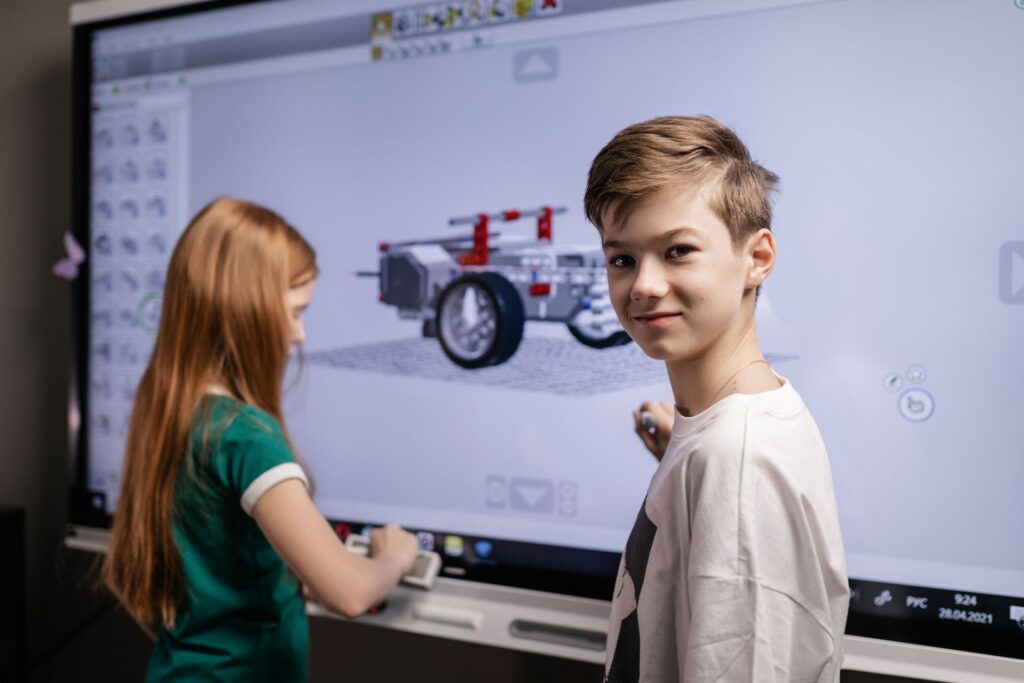
Not every classroom has the same budget, the same amount of space, or students at the same starting point. A kindergarten classroom introducing basic robotics doesn’t need the same setup as a high school engineering elective, and a district with a modest STEM budget shouldn’t have to force-fit a program built for a much larger one. The technology has to bend to the classroom, not the other way around.
Scalable school technology solutions adjust to whatever budget, grade level, and physical space a school actually has, rather than assuming a one-size answer works everywhere. That flexibility is what makes hands-on, 21st-century learning experiences possible in the first place, whether that’s a single robotics kit shared across a small classroom or a full lab built for a much bigger program.
The real payoff shows up in what students actually get out of it. Younger students build early collaboration and problem-solving skills just from working through hands-on projects together. Older students get something closer to real career and technical education, work that builds career readiness by mirroring the kind of problem-solving they’ll actually do on a job later. Along the way, dynamic, project-based content tends to boost engagement in a way a worksheet never will, students pick up genuinely in-demand skills while having enough fun that it doesn’t feel like the point of the lesson was “learn a skill.”
3. Enrollment decline is forcing sharper prioritization, not blanket cuts
Declining enrollment sounds like it should simply mean smaller technology budgets across the board, but the districts handling it well aren’t cutting evenly. At the ISTELive 26 conference, panelists reported by GovTech pushed districts to resist the urge to add new programs or purchase additional technology during tight budget years, and instead protect the programs already proven to work, demand real evidence from vendors before signing new contracts, and sharpen financial decision-making rather than spreading cuts thin across everything at once.
That’s a meaningfully different posture than simply shrinking every line item by the same percentage. It means some tools get renewed, others get cut entirely, and very little gets a token reduction that satisfies nobody.
4. AI tools are getting vetted before they’re purchased, not adopted by default
A few years ago, plenty of AI-powered classroom tools arrived free, subsidized by vendors trying to build market share. That phase is ending. According to K-12 Dive’s coverage of 2026 ed-tech trends, Keith Krueger, CEO of the Consortium for School Networking, expects districts will increasingly have to pay for AI tools that used to come free, right as they’re also being asked to scrutinize which large language models those tools actually rely on and how student data gets handled.
The net effect is a slower, more deliberate purchasing process for AI tools specifically, one that weighs data privacy and vendor transparency alongside whatever the tool promises to do, rather than adopting anything free simply because it’s free.
5. Buildings are being asked to run on shared infrastructure instead of parallel systems
Cybersecurity, networking, and device management all cost more when every building manages its own separate setup instead of running on shared district-wide infrastructure. A single centralized system for monitoring devices, managing security patches, and tracking hardware inventory scales far more efficiently than the same functions handled building by building with inconsistent tools and inconsistent staff expertise.
This is less visible than a new robotics lab or a set of interactive displays, but it’s often where districts recover the most budget room. Centralizing what can be centralized frees up money for the classroom-facing purchases that actually show up in a parent’s tour of the building.
A district running one shared platform to monitor device health, push security updates, and track hardware location across every building typically needs a fraction of the staff time that separate, building-by-building systems require. When a laptop cart goes missing or a batch of devices needs an urgent patch, a centralized system means one action instead of a phone call to five different building coordinators, each checking their own spreadsheet.
What This Means Going Into the Next Budget Cycle
None of this points to schools spending less on technology overall. Total K-12 technology spending keeps climbing nationally even as individual district budgets tighten, which only works if that money is being spent more deliberately than it used to be. The districts navigating this well aren’t the ones with the biggest checks to write. They’re the ones treating existing infrastructure, consolidation, and vendor scrutiny as real budget levers instead of afterthoughts, which is exactly what “smarter, not bigger” looks like in practice.
For district leaders building next year’s budget request, the practical takeaway is less about finding new money and more about accounting for money that’s already being spent inefficiently. An honest audit of device lifecycles, platform overlap, and building-by-building inconsistency tends to surface more available budget than most districts expect, often enough to fund the next genuinely necessary purchase without asking for a bigger allocation at all.