
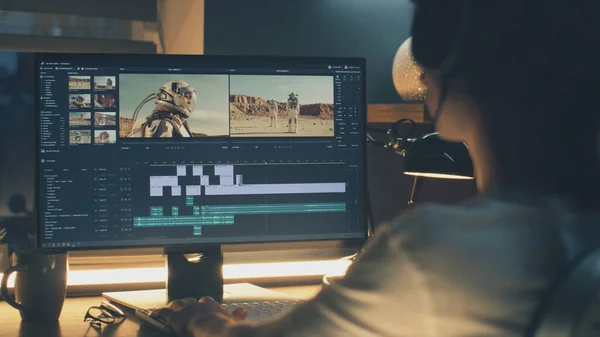
Video editing has traditionally started with a timeline, a collection of clips, and plenty of small manual decisions. An editor reviews footage, marks useful moments, cuts unwanted sections, rearranges scenes, and gradually turns scattered material into a story.
Natural-language prompting is beginning to change that starting point.
Instead of immediately working through menus and timeline controls, creators can increasingly describe what they want in ordinary language. An instruction might be as simple as asking for a short opening, a faster middle section, or a rough cut that prioritizes particular moments. AI-assisted editing systems can interpret those instructions and help prepare an initial version that remains open for further editing.
The important change is not that traditional editing disappears. It is that communicating an editing intention is becoming easier.
Editing Is Moving From Commands to Intent
Traditional software expects users to understand how particular editing tools work.
A creator may know that a section feels too slow but still needs to decide which clips to shorten, where cuts should occur, and how everything should be rearranged.
Natural-language editing introduces another layer between the idea and the timeline.
Instead of thinking only in software commands, users can express the result they are trying to achieve:
- “Keep the strongest reactions and remove long pauses.”
- “Create a 45-second version for social media.”
- “Put the product demonstration before the explanation.”
- “Make the opening move faster.”
- “Build a rough cut using the best moments from these clips.”
The Rough Cut Is Becoming Easier to Build
One of the most time-consuming parts of editing is reviewing raw footage.
A creator who records several takes may have many minutes, or even hours, of material that will never appear in the finished video. Identifying usable moments and arranging them into a sensible sequence takes concentration before detailed creative work even begins.
An AI-assisted workflow can help with this organizational stage. For example, a ChatGPT video editing tool can work from natural-language instructions to help review supplied footage, identify useful sections, remove unnecessary material, and prepare an editable rough cut. The resulting timeline can then be reviewed and changed rather than treated as a finished video.
That distinction matters. AI becomes a starting assistant rather than an automatic final editor.
Prompts Make Editing More Accessible to Beginners
Professional editors develop a vocabulary around cuts, pacing, transitions, tracks, sequences, keyframes, and other technical concepts.
Beginners may understand the video they want without knowing how to translate that idea into editing terminology.
Natural language reduces some of this gap.
Someone does not necessarily need to know the technical name for every editing operation before expressing an intention. Saying “remove the quiet parts between answers” communicates a useful goal even if the person has never studied editing techniques.
Better Prompts Can Produce Better Starting Points
Natural-language tools are only as useful as the direction they receive.
“Edit my video” leaves almost every creative decision undefined. A more detailed request provides context about what the creator actually wants.
A practical prompt can include:
Purpose
Explain whether the video is a tutorial, product demonstration, social clip, interview, recap, or another format.
Priority
Identify the moments, speakers, products, or ideas that must remain.
Length
Give an approximate target rather than leaving duration completely open.
Pacing
Describe whether the edit should feel quick, relaxed, instructional, energetic, or conversational.
Structure
Mention how the opening, main section, and ending should be organized when sequence matters.
Human Judgment Still Shapes the Final Video
Natural-language editing may reduce mechanical work, but many of the strongest editing decisions remain subjective.
An AI system can shorten pauses, arrange clips, or prepare a first sequence. It cannot automatically know every emotional intention behind a story.
A creator still has to decide whether a reaction deserves another second on screen, whether a cut happens too early, whether a joke lands properly, or whether the music supports the scene instead of distracting from it.
The same applies to accuracy. Automatically selected clips, captions, timing, and visual choices should be reviewed before publication.
For that reason, natural-language editing works best when the first AI-generated version is treated as material to inspect rather than an unquestionable result.
A Different Relationship With the Timeline
The timeline is unlikely to disappear. What is changing is how creators arrive there.
Instead of beginning every project by manually sorting clips and assembling the first sequence, creators can describe their intentions first and use AI assistance to establish a workable starting point.
They can then spend more attention on storytelling, pacing, visual rhythm, sound, and the details that make one edit different from another.
Conclusion
Natural-language prompts are changing video editing by making intentions easier to communicate and early editing work easier to organize.
Their greatest value may not be creating a finished video automatically. It may be helping creators move from a pile of raw footage to an editable first draft with less manual setup.
The final creative decisions still belong to the person behind the video. What changes is how quickly that person can reach the stage where those decisions actually matter.